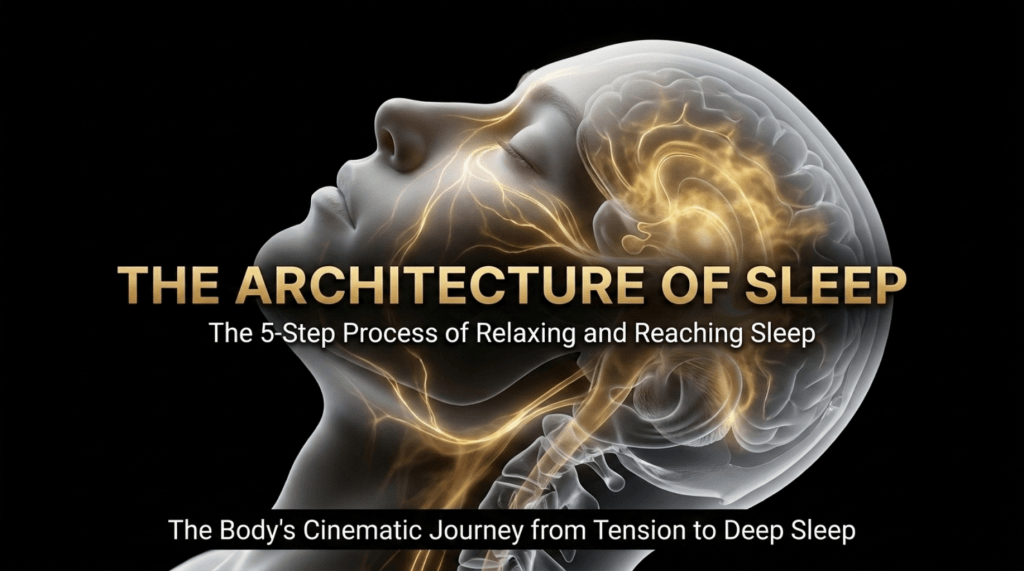
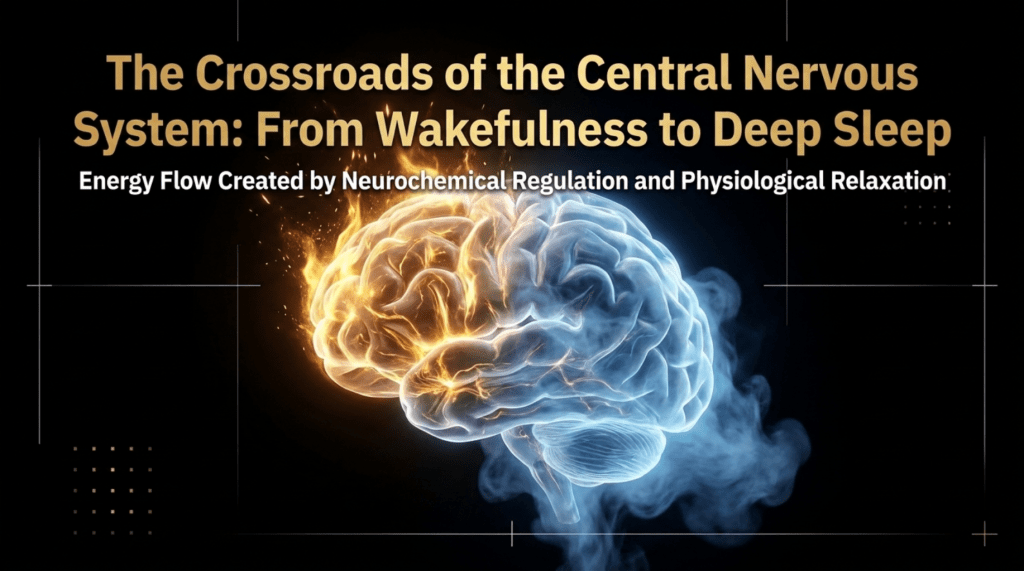
Sleep is not merely a state in which consciousness is turned off.
It is a refined physiological transition in which the body’s energy, once directed outward, converges inward.
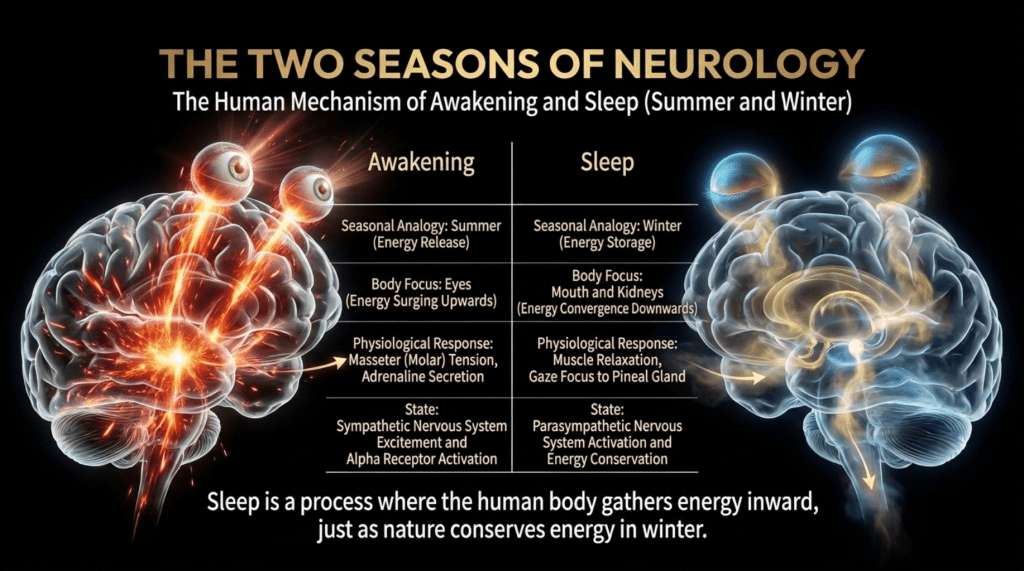
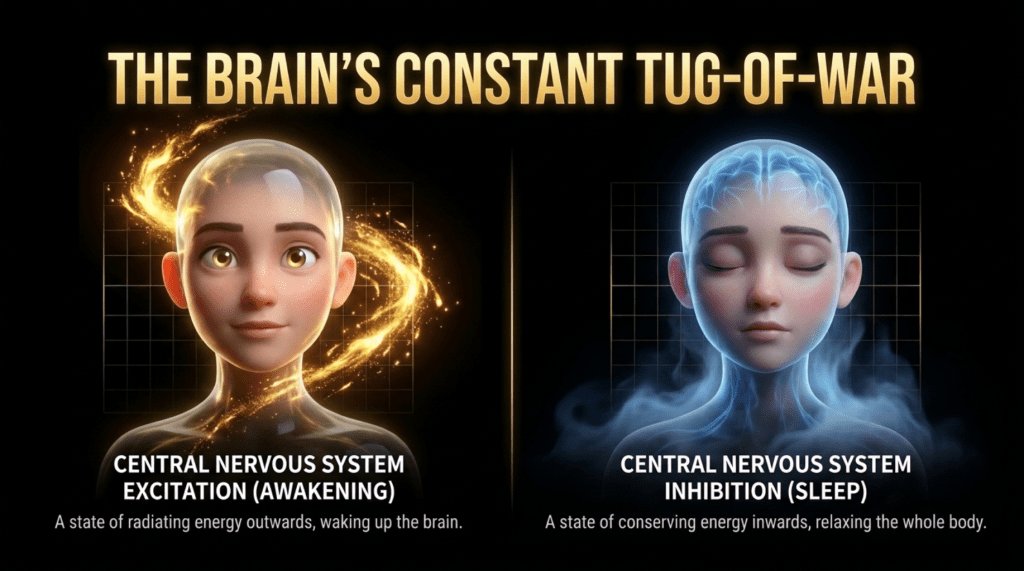
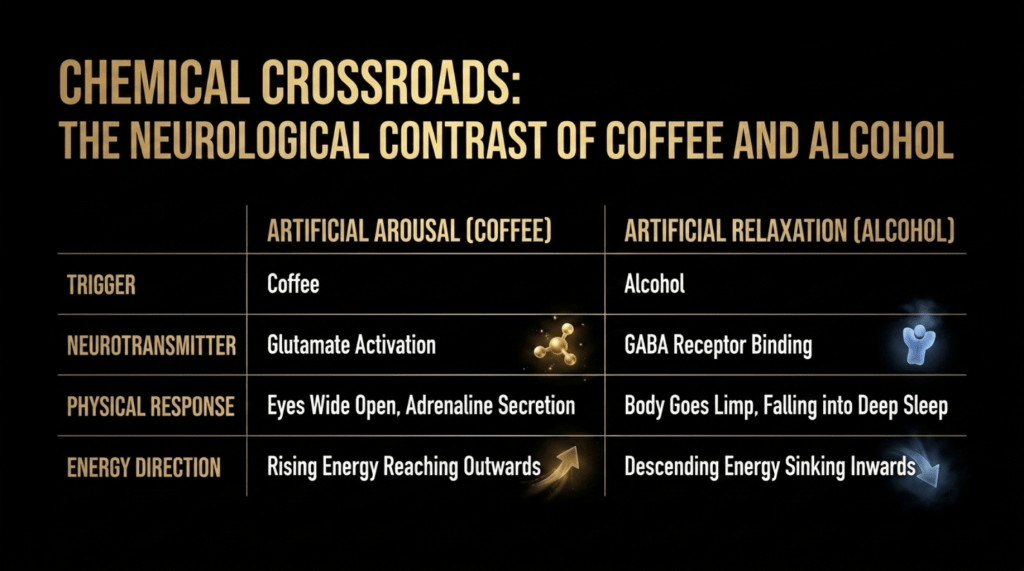
While awake, human energy is directed primarily upward and outward.
The eyes are open, the gaze is oriented toward the external world, and the muscles are tense.
This state resembles summer, governed by the sympathetic nervous system.
However, in order to enter sleep, this flow must fundamentally change.
Energy must move from above to below, and from the outside to the inside.
Just as nature passes through autumn into winter, the human body also shifts toward a mode of convergence and storage of energy.
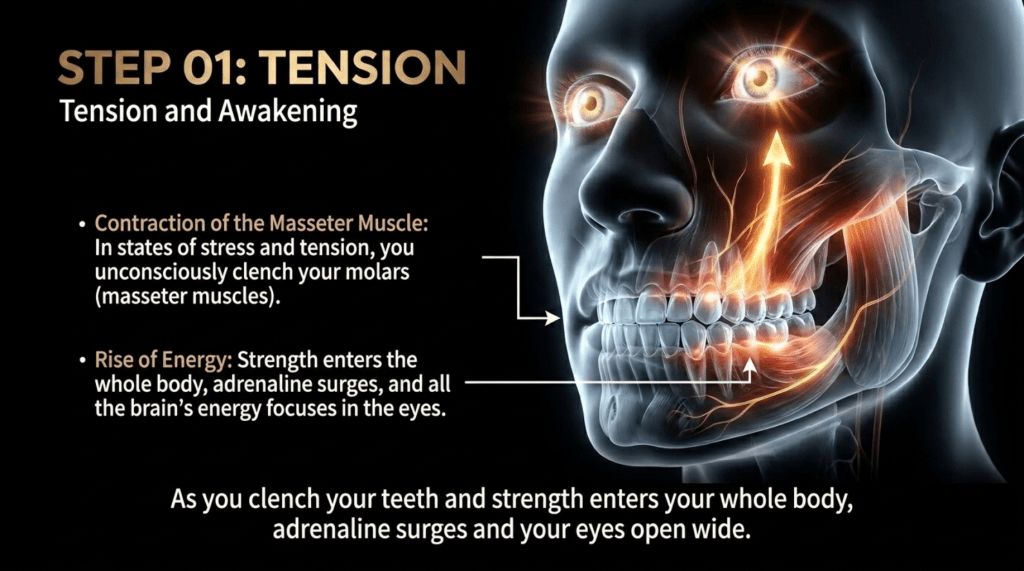
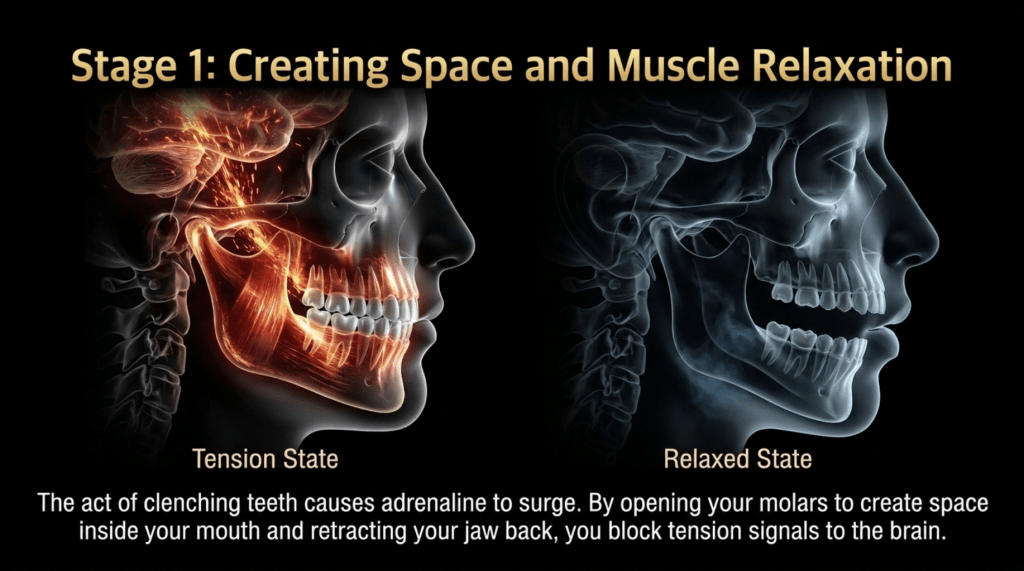
At this stage, the most important factor is the release of tension.
The eyes relax, the fists unclench, and the muscles of the arms and legs loosen.
Muscular tension represents an ascending, activating energy associated with alertness and activity.
If this tension is not released, energy remains elevated, and entry into sleep becomes impossible.
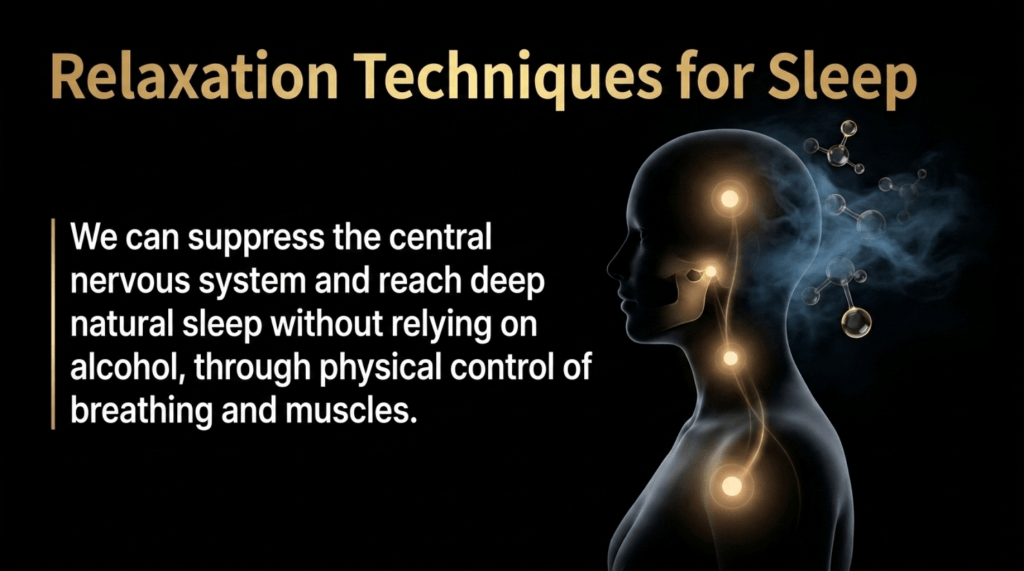
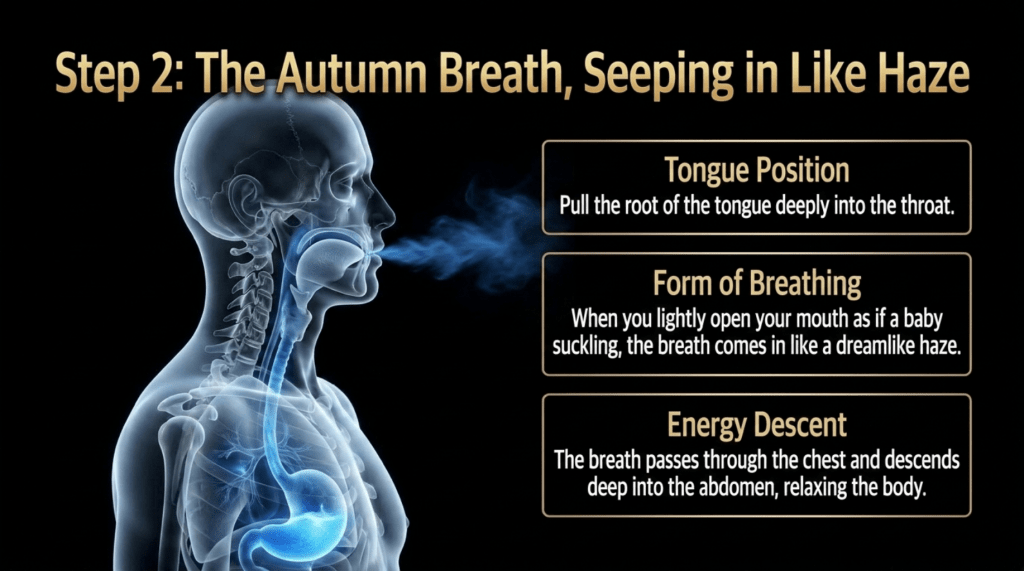
Breathing is the key mediator of this transition.
Deep inhalation goes beyond simple oxygen intake; it gathers dispersed energy inward.
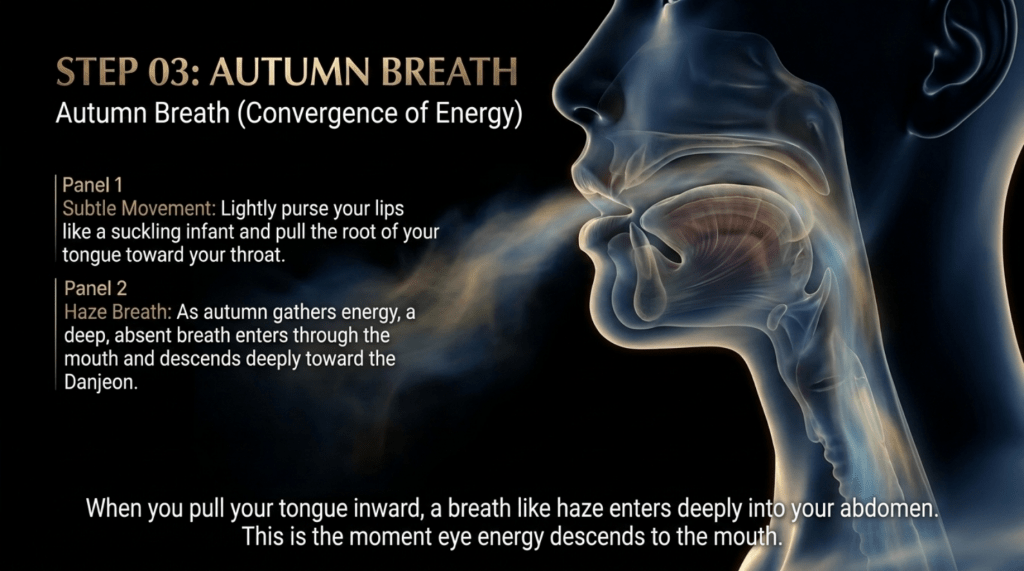
Actions such as chewing, swallowing, and holding within the mouth resemble the converging force of autumn, gradually drawing energy downward into the body.
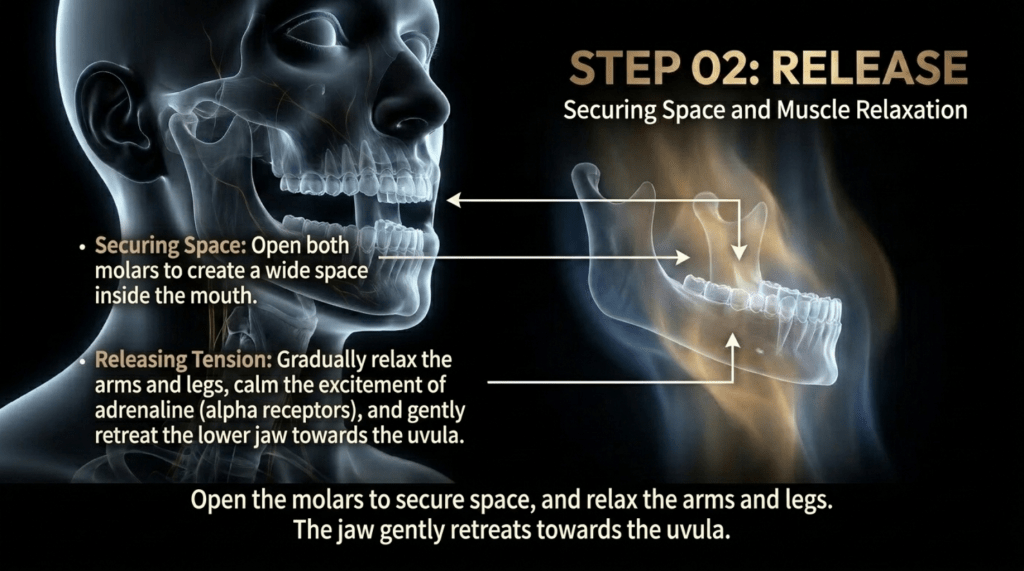
In particular, the position and movement of the tongue play a crucial role.
When the tongue is drawn inward and its root is guided toward the deeper part of the throat, the upward flow of energy is interrupted.
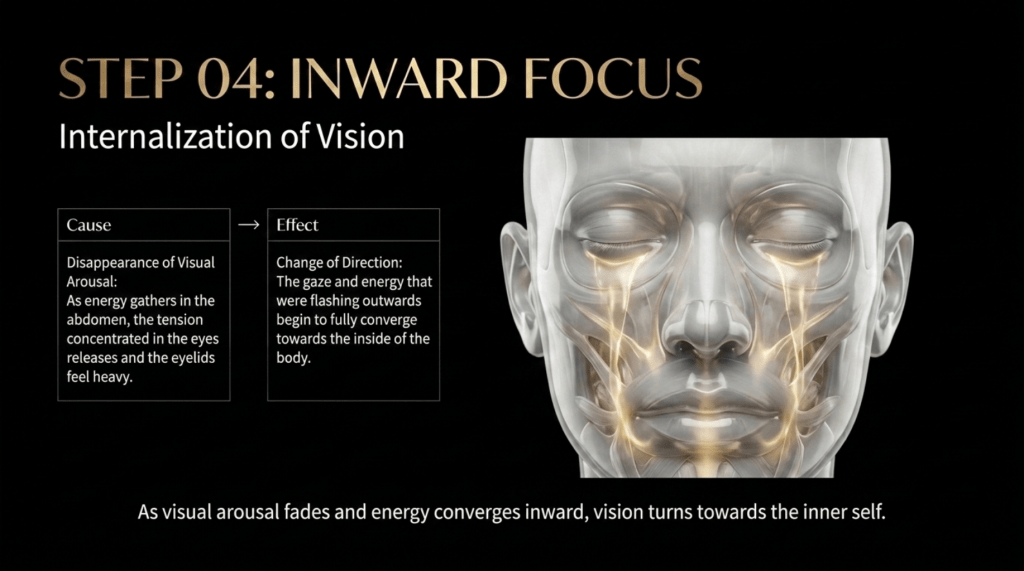
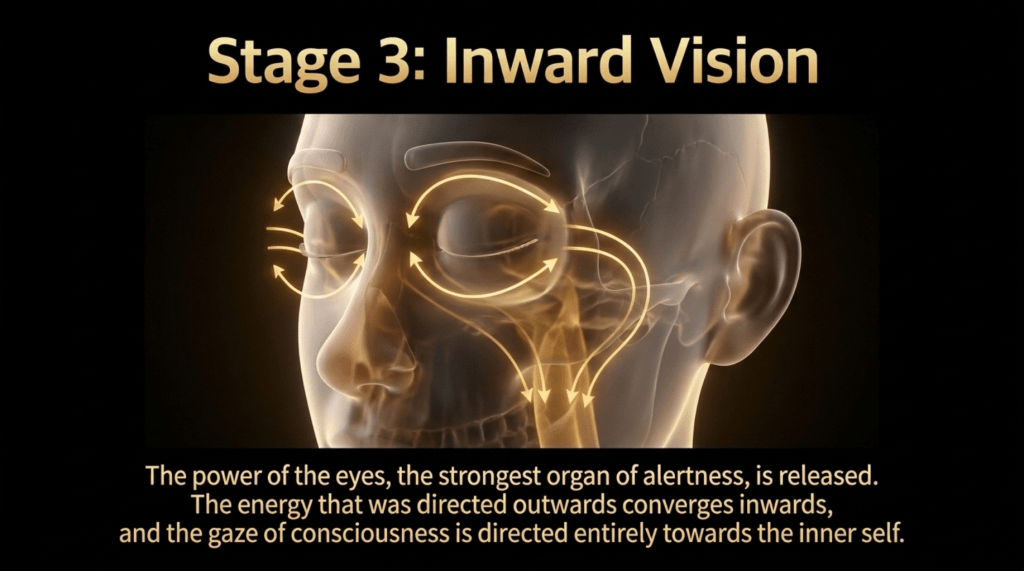
As a result, the tension that had been concentrated in the eyes dissipates, and the activity of the visual system is gradually suppressed.
At the same time, the jaw naturally relaxes and moves slightly backward.
As the jaw lowers and approaches the neck, energy shifts toward the abdomen.
At this point, a subtle tension forms in the abdominal region—this is not a sign of strain, but rather a stable state in which energy gathers at the center.
When this process is sufficiently achieved, the eyelids grow heavy, and the gaze no longer turns outward.
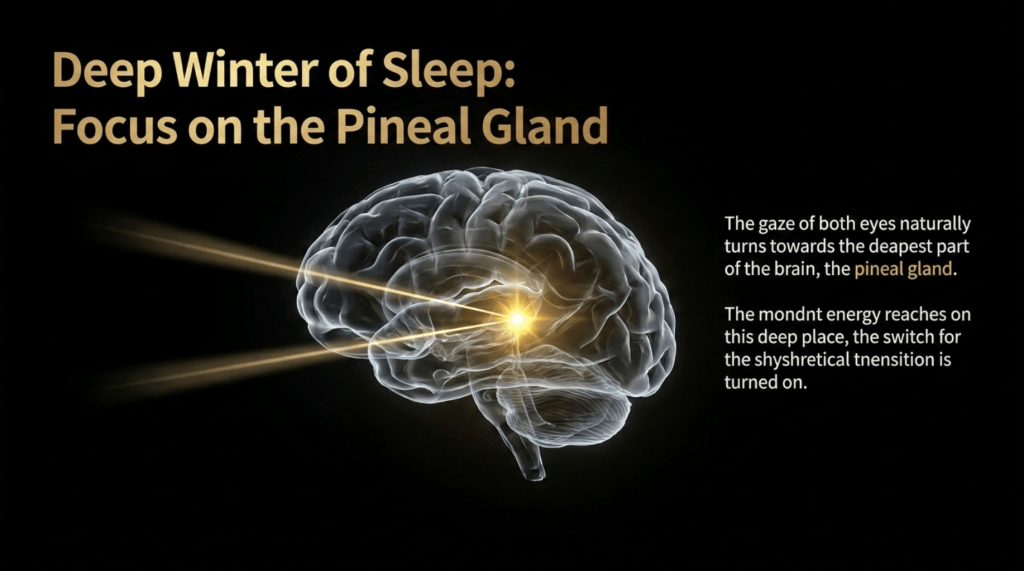
As the direction of both eyes shifts inward—toward the center of the brain—consciousness gradually descends into the internal state.
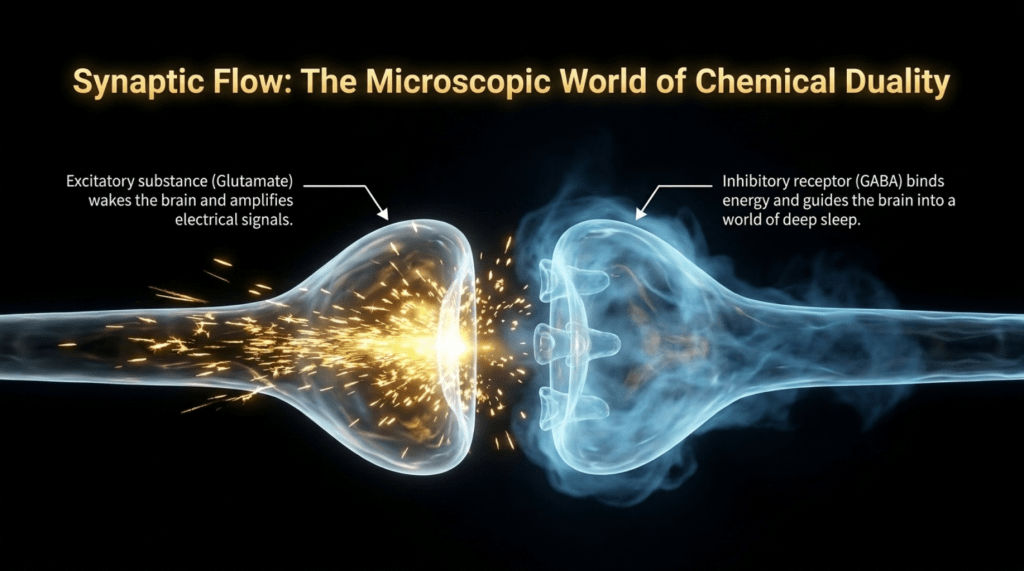
At this point, the hypothalamus and pineal gland become activated, promoting the secretion of melatonin.
At the same time, sympathetic activity is suppressed while parasympathetic activity becomes dominant.
This is precisely the stage defined physiologically as the onset of sleep.
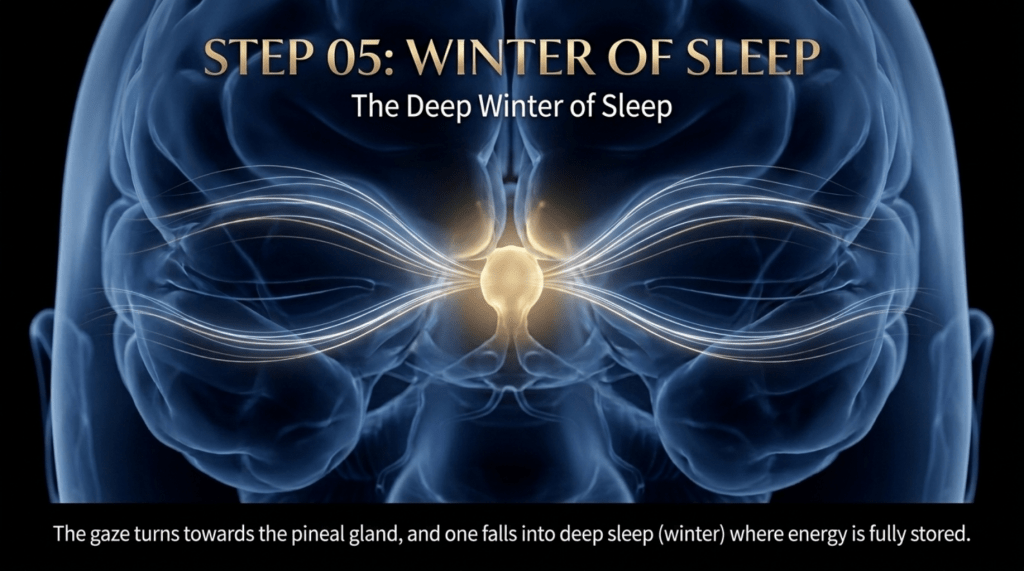
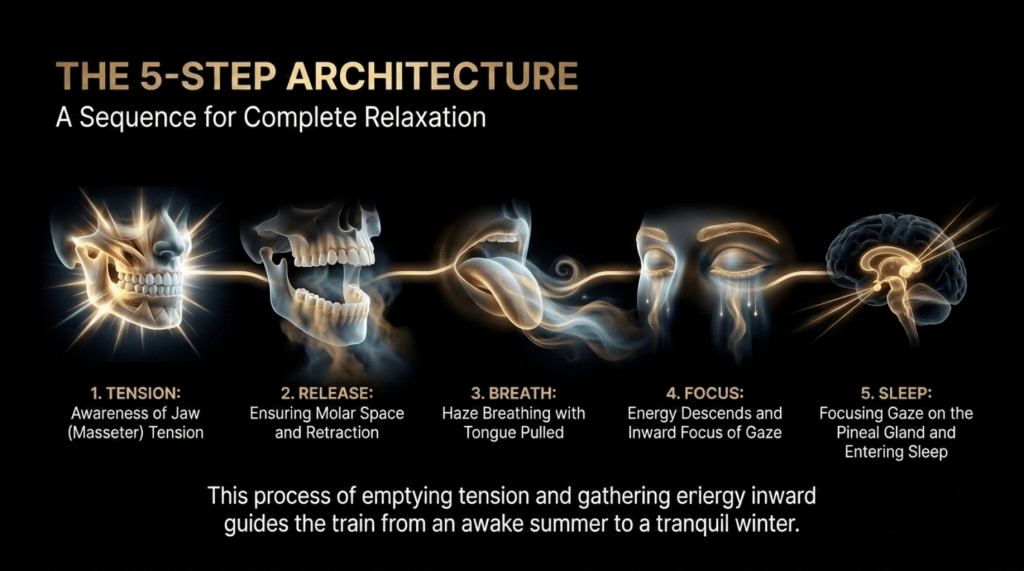
One then enters the deep, winter-like stage of sleep.
The gaze of both eyes naturally converges toward the center,
directing itself toward the deepest region of the brain—the pineal gland.
At this moment, a crucial physiological transition takes place.
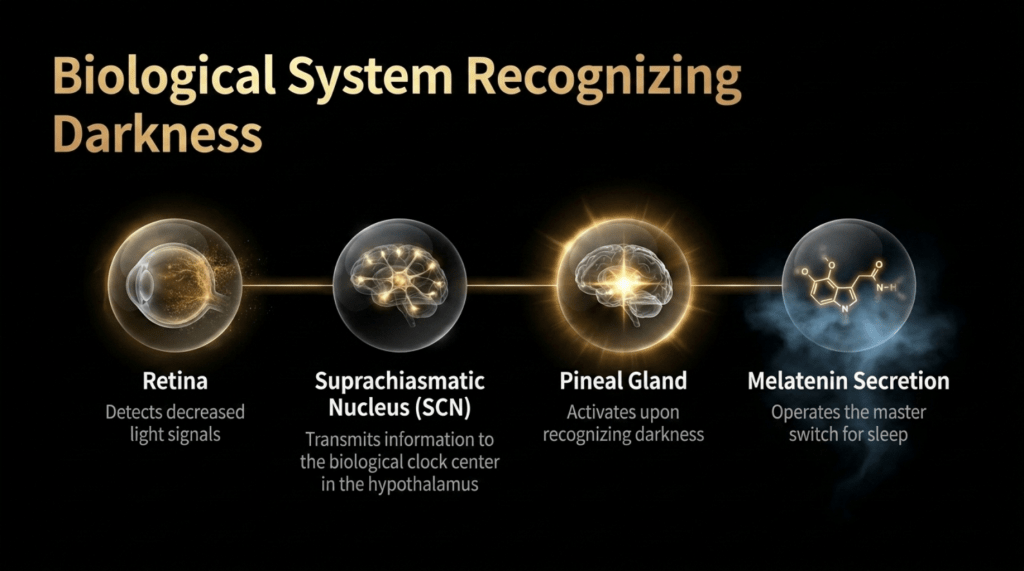
As the amount of light entering the retina decreases,
this information is transmitted via the optic nerve to the suprachiasmatic nucleus of the hypothalamus.
This nucleus serves as the central regulator of the body’s biological clock,
and upon perceiving darkness, it sends signals to the pineal gland.
In response, the pineal gland begins to secrete melatonin.
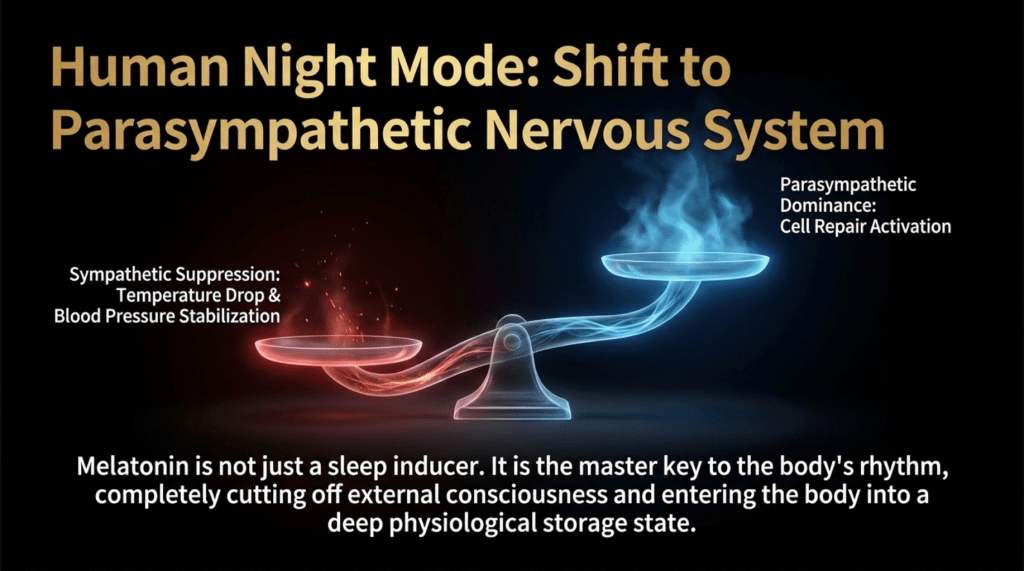
Melatonin is not merely a sleep hormone.
It is a signaling molecule that shifts the entire body into a “night mode.”
Body temperature gradually declines,
blood pressure stabilizes,
sympathetic activity is suppressed, and parasympathetic activity becomes dominant.
Ultimately, the secretion of melatonin
cuts off the outward orientation of consciousness
and serves as the key that guides the body into a deep state of restoration and storage.
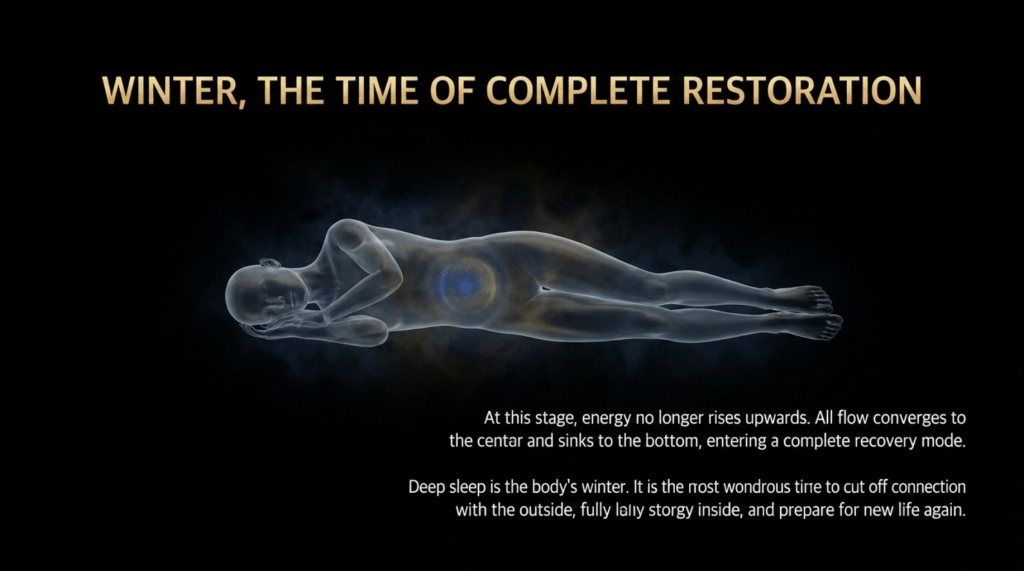
At this stage,
energy no longer rises upward.
All flows converge toward the center,
settle downward,
and the body enters a complete recovery mode.
This is the true essence of sleep as “winter.”
It is a time in which the connection to the external world is severed,
energy is stored within,
and life prepares itself anew.
 한태영 원장님의 사상이야기